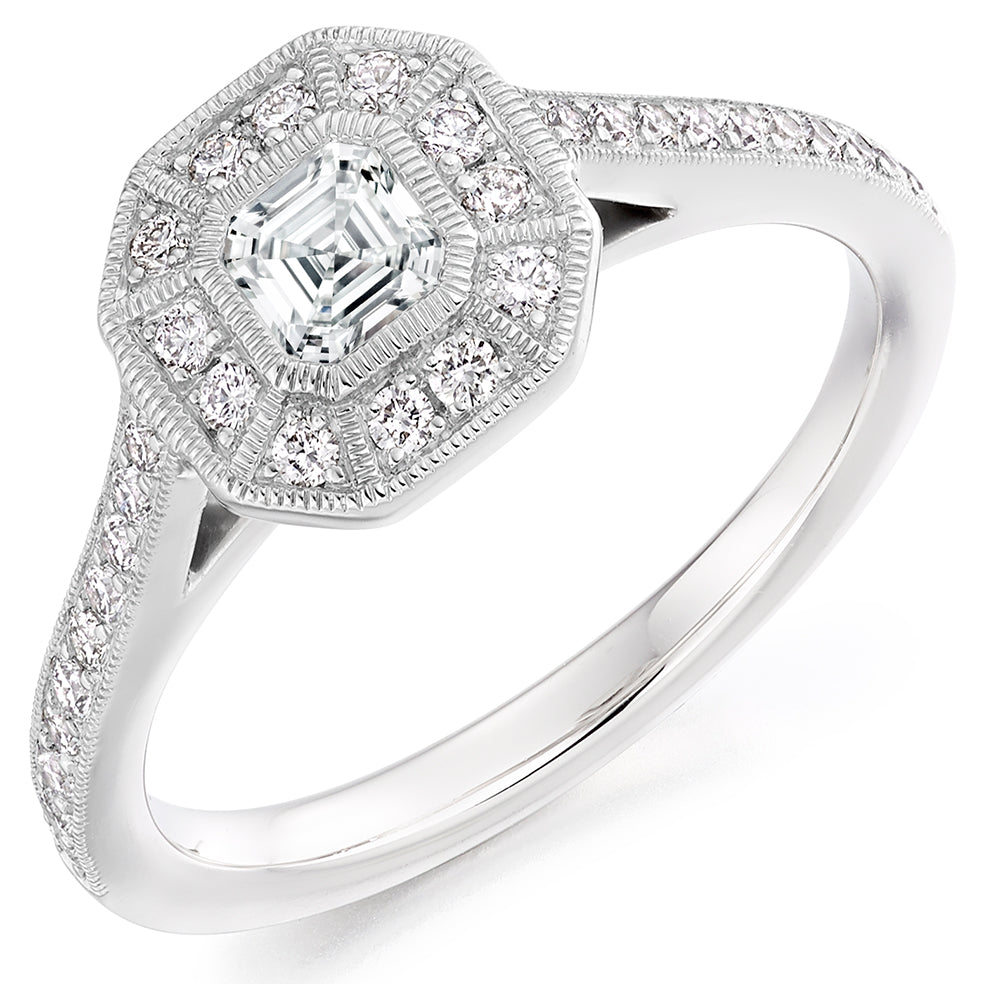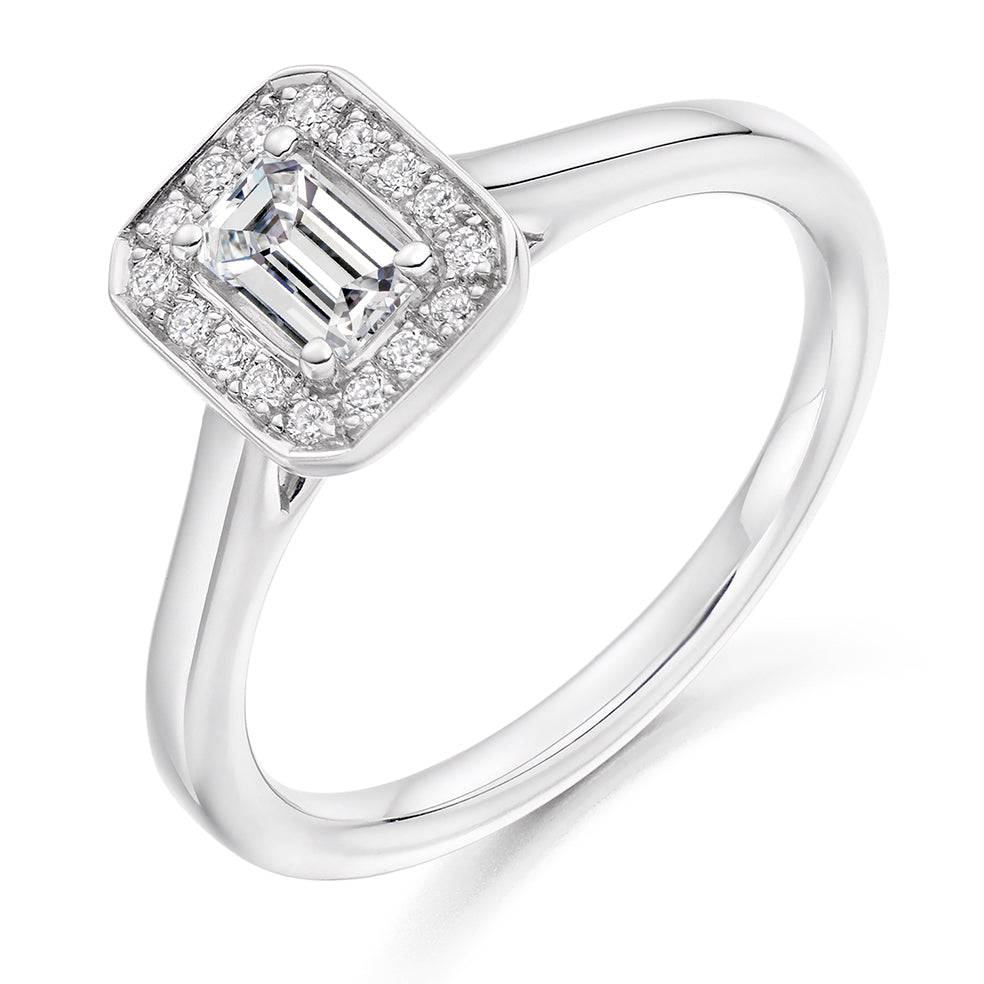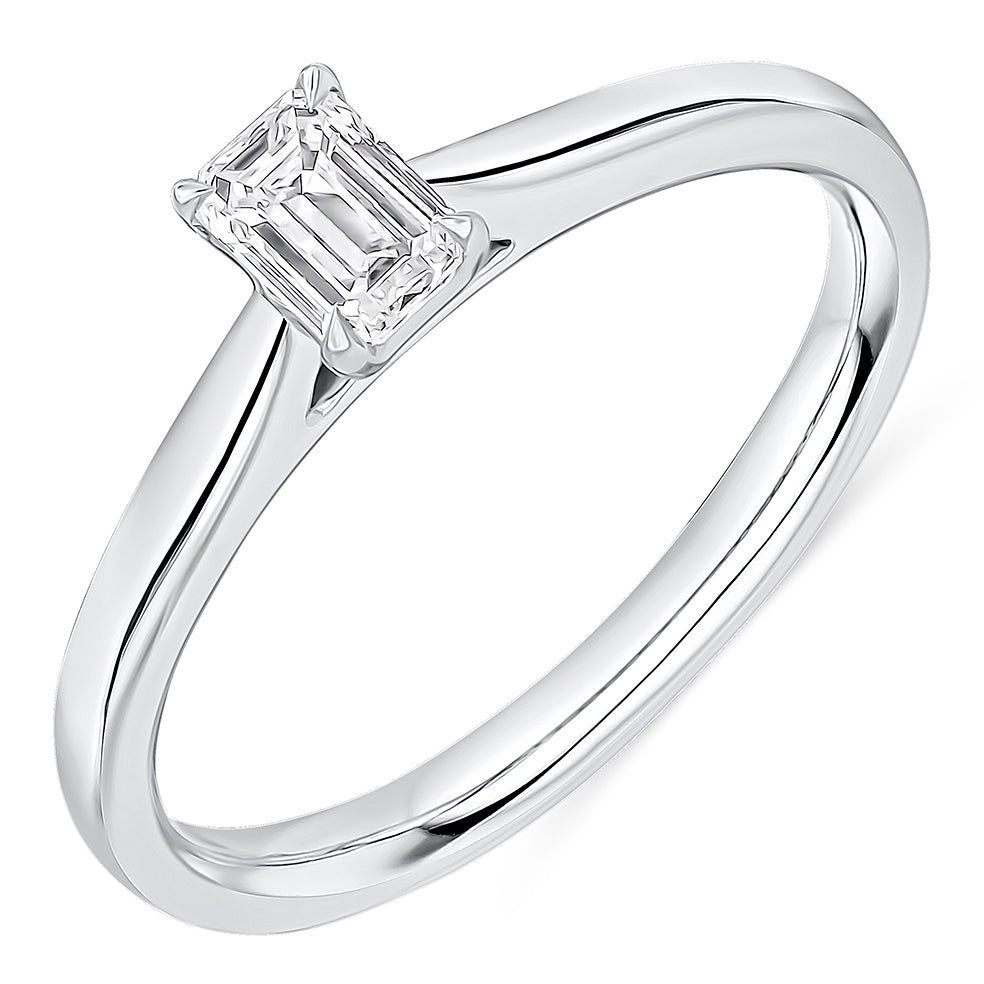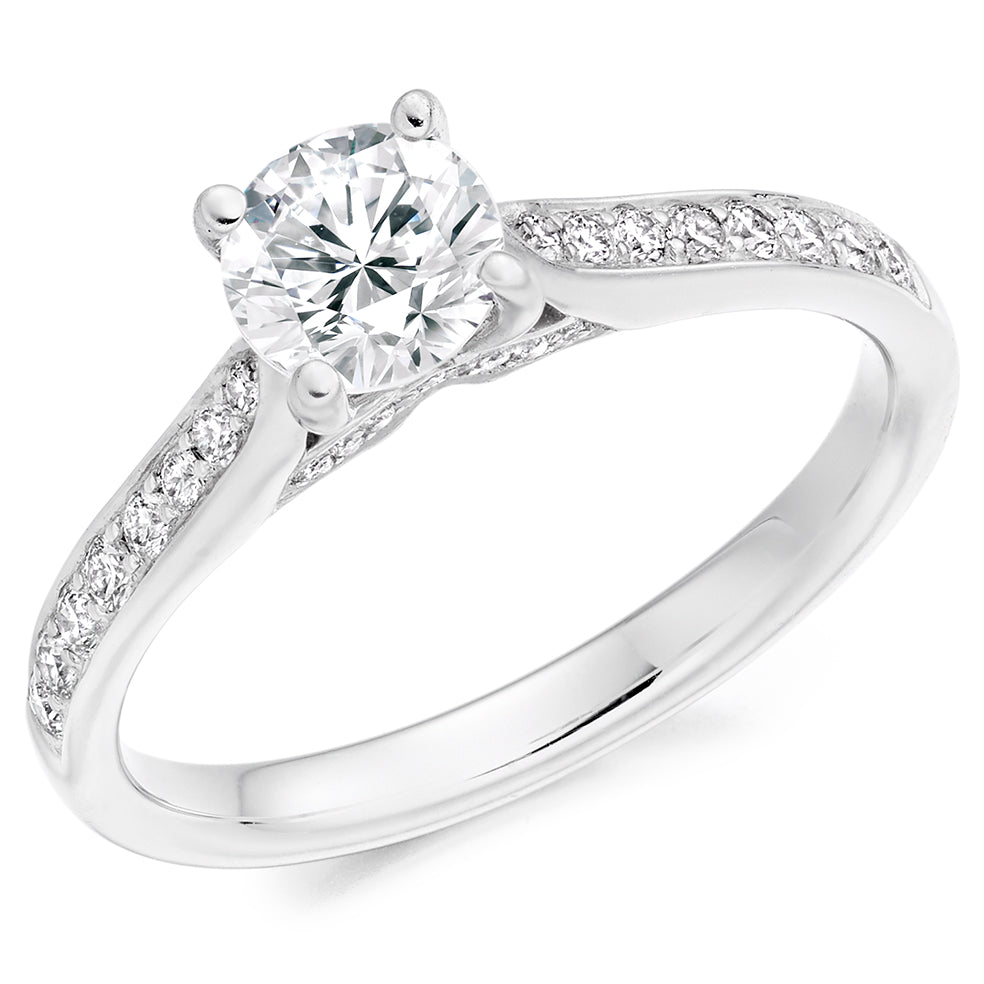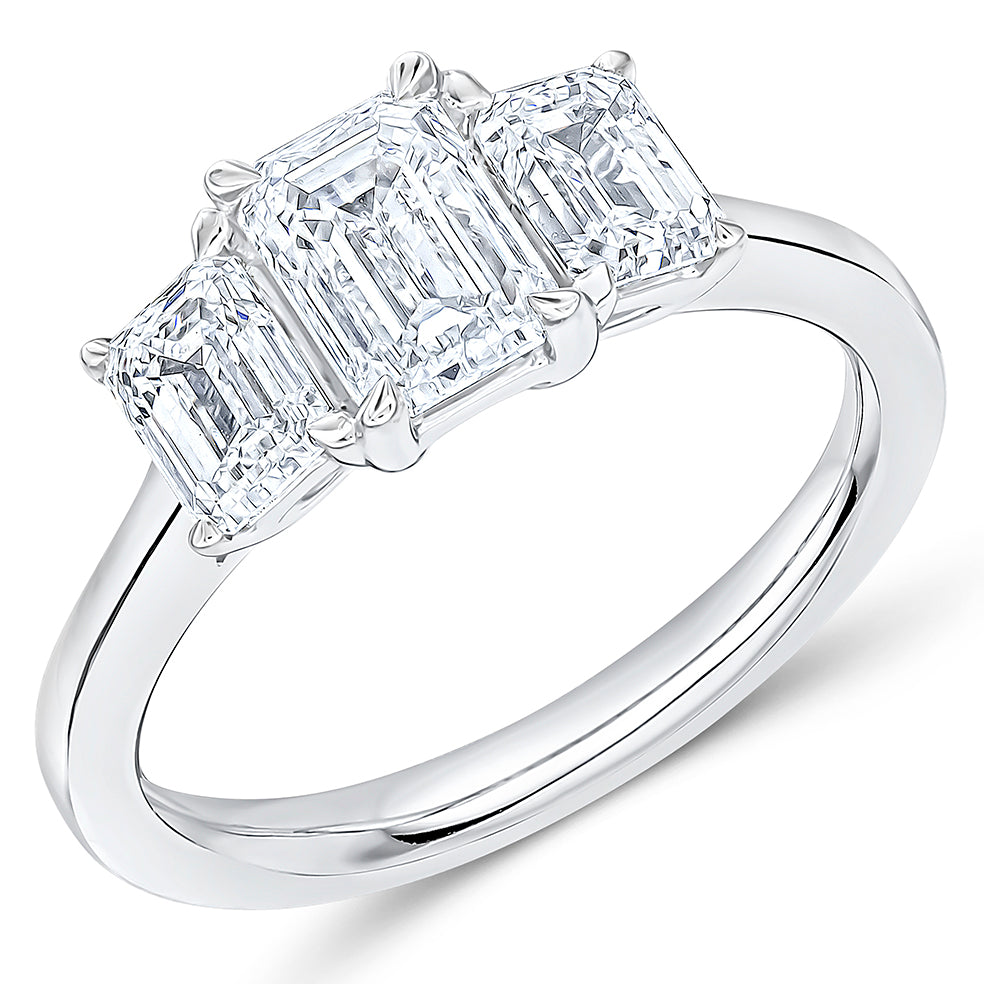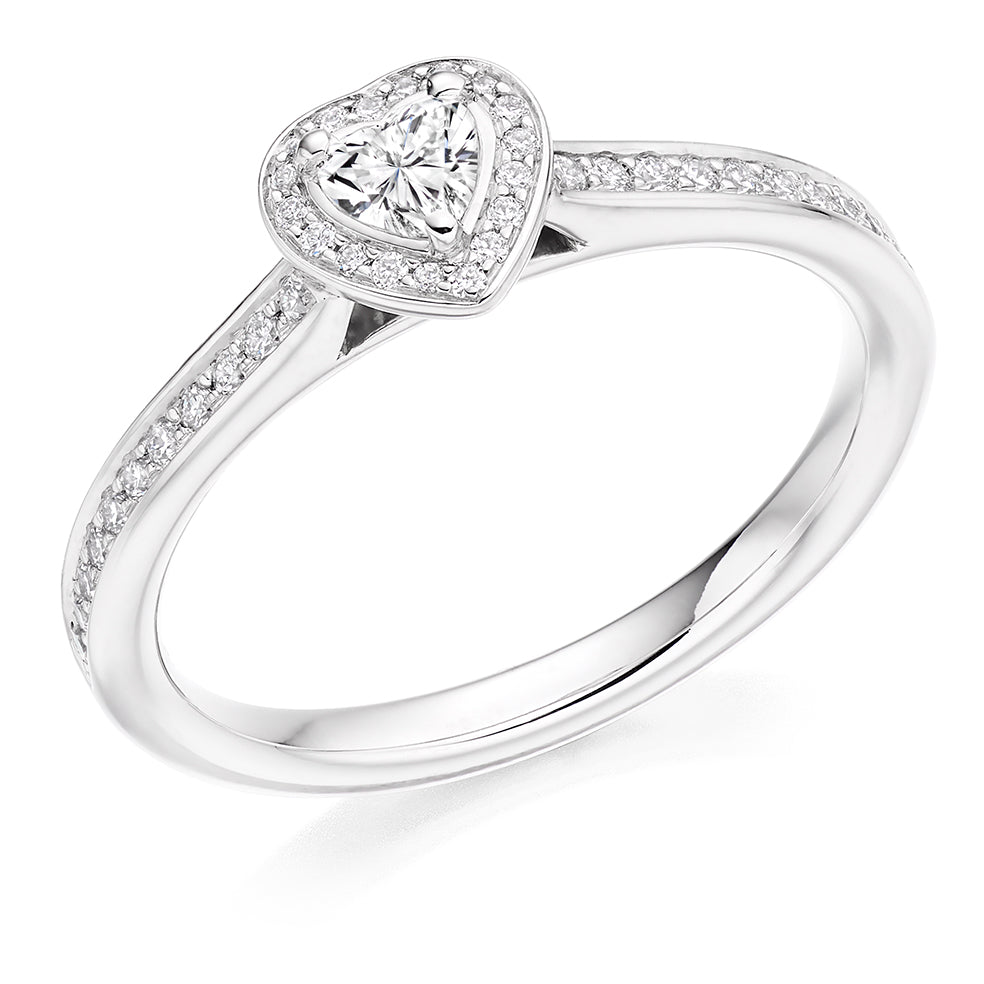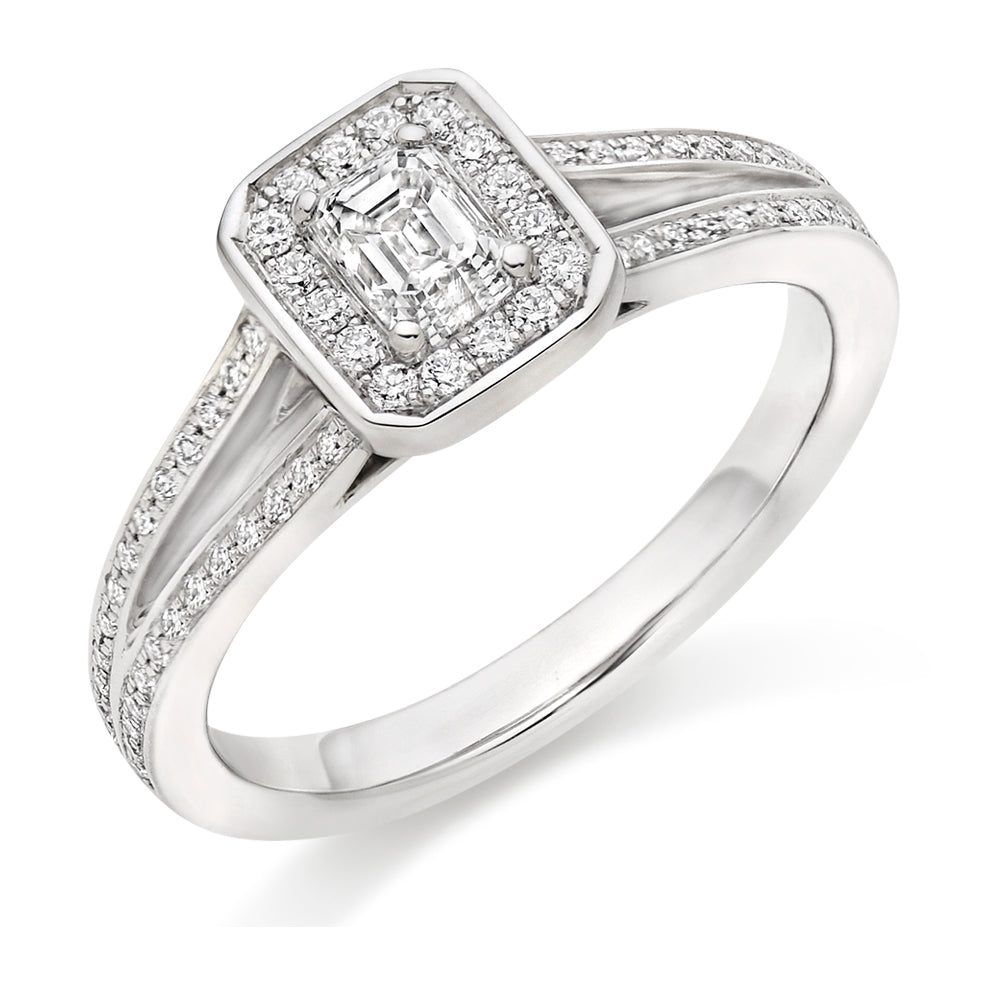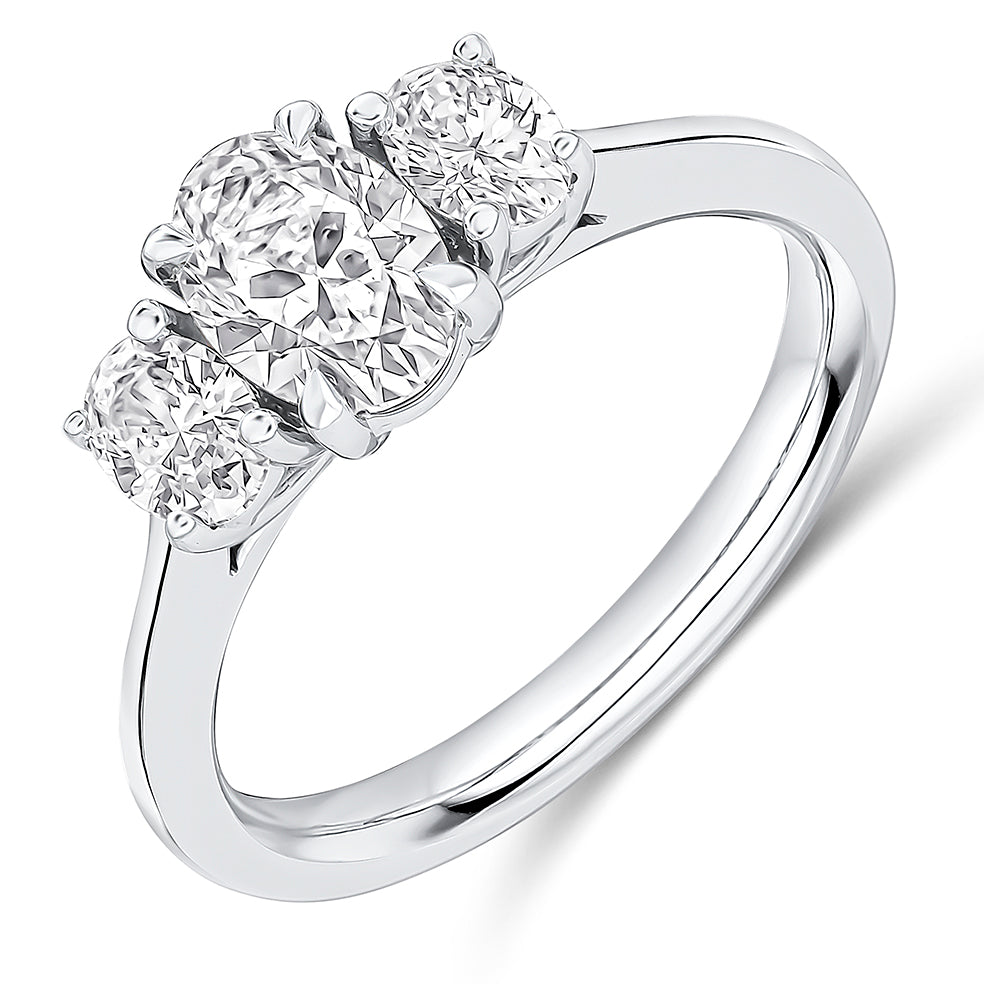


White gold is a popular choice for engagement rings and wedding bands. Its cool, bright finish sits beautifully beside a diamond, giving a ring a clean, understated look.
If you wear white gold every day, you may notice that it gradually takes on a warmer tone. This is normal, and it does not mean your ring is damaged or that the gold has changed.
Most white gold jewellery is rhodium plated to give it a brighter white finish. As that thin surface layer wears away, the natural colour of the gold alloy beneath becomes more visible.
At Anupam, we re-rhodium plate white gold in our own workshop in Ashford. If your ring no longer looks the way you would like it to, we can assess the finish and advise on bringing back its bright white appearance.
Is white gold real gold?
Yes. White gold is real gold, mixed with other metals to create a paler colour and a suitable alloy for jewellery.
Pure gold is yellow. The metals used in a white gold alloy help reduce that colour, although the result is not usually the bright white finish many people associate with a white gold ring. That is where rhodium plating comes in.
White gold is available in different carats, just like yellow and rose gold. The carat tells you how much pure gold the alloy contains.
| White gold | Fineness mark | Pure gold content |
|---|---|---|
| 9ct | 375 | 37.5% |
| 14ct | 585 | 58.5% |
| 18ct | 750 | 75% |
The remaining percentage consists of other metals. The exact composition affects the colour of the alloy, so not every white gold ring will look the same once its plating begins to wear.
For a closer look at what these numbers mean, read our guide to UK hallmarks explained.
Why does white gold turn yellow?
The simple answer is that the rhodium plating is wearing away.
Rhodium is a bright white metal from the platinum group. Applied as a very thin layer, it gives white gold the crisp, reflective finish many people prefer.
Over time, everyday wear gradually removes some of that layer. As the underlying alloy becomes visible, the ring may look creamier, warmer or slightly yellow in certain areas.
The process is usually gradual. You might first notice a change on the underside of the band, around the edges or near the setting, where contact and friction are greatest.
How quickly this happens depends on several things, including:
- How often you wear the ring. A ring worn every day generally experiences more friction than one reserved for occasional wear.
- The design of the ring. Different shapes, settings and surfaces experience wear in different ways.
- Other jewellery. Rings worn alongside one another can rub against each other.
- Everyday activities. Repeated contact with surfaces, handwashing and household products can affect how the finish wears over time.
There is no single timetable that applies to every ring. The important thing to remember is that a warmer colour is usually a change in the surface finish, not a change in the gold itself.
What is rhodium plating?
Rhodium plating is the process of applying a thin layer of rhodium to the surface of a piece of jewellery.
It is what gives most white gold engagement rings and wedding bands their bright, white appearance. Without that layer, the underlying alloy may have a softer, warmer tone.
When a ring comes in for re-plating, the jeweller first assesses its condition. The ring is then cleaned and, where appropriate, polished before a fresh layer of rhodium is applied through an electroplating process.
The result is a renewed white finish.
At Anupam, we carry out re-rhodium plating in our own workshop in Ashford. We charge £50 per ring, and the process takes up to a week.
If your ring has scratches, worn areas or a setting that needs attention, we can assess those separately and explain what is needed before proceeding.
How often does white gold need re-plating?
There is no fixed rule, and we would not suggest re-plating a ring simply because a certain amount of time has passed.
It depends on the individual ring, how often you wear it, the way you use your hands and how its finish changes over time. One person’s ring may retain its appearance for longer than another’s, even when both are made from white gold.
Our advice is simple: re-plate your ring when the change in colour starts to bother you.
Some people like their white gold to keep its bright, cool finish and prefer to have it refreshed as soon as the warmer tone becomes noticeable. Others are perfectly happy with the softer colour that develops as the plating wears.
Neither approach is wrong. There is no need to have your ring re-plated just because you think you should.
When you do decide to have it done, it is also a sensible opportunity to have the claws, settings and general condition of the ring checked. Particularly with an engagement ring or wedding band worn every day, a little attention can help identify wear that may otherwise go unnoticed.
Our guide to how to look after your jewellery explains more about caring for the pieces you wear most.
Is it all right to wear white gold when it has turned yellow?
Absolutely.
A white gold ring that has lost some of its rhodium plating is not automatically damaged or in need of repair. It is simply showing more of the colour of the alloy beneath.
If you are happy with the way it looks, you can continue wearing it. Re-plating is a choice about the finish you prefer, rather than something that must be done on a schedule.
The exception is if you notice a loose stone, damaged claws, a crack or significant wear to the band. Those are separate concerns, and it is worth having the ring assessed rather than treating it as a plating issue alone.
Is there a white metal that does not need plating?
Yes. If you prefer a naturally white metal, platinum 950 and palladium 500 or 950 are alternatives worth considering.
Unlike rhodium-plated white gold, these metals do not rely on a white surface coating to achieve their natural colour. There is no rhodium layer to wear away, although their surfaces will still develop signs of everyday wear.
| Metal | Appearance | Does it need rhodium re-plating? |
|---|---|---|
| White gold, 9ct, 14ct or 18ct | The alloy’s colour beneath a bright rhodium finish | May need refreshing |
| Platinum 950 | Naturally white, with a soft, silvery appearance | No |
| Palladium 500 or 950 | Naturally white | No |
| Yellow or rose gold | Colour comes from the alloy itself | No |
Platinum 950 is denser and heavier than white gold, while palladium is lighter than platinum. Fresh rhodium plating generally looks brighter and more reflective than the natural finish of platinum, which has a softer, silvery character.
The right choice depends on the look you prefer, the feel of the ring and your budget. Prices also change with metal markets, so comparing the same design across different metals is the fairest way to assess the difference.
Our wedding ring builder lets you explore how the choice of metal affects the price of a band.
If you are choosing a new engagement ring or wedding band, we recommend looking at white gold and platinum 950 side by side in daylight. The difference is easier to judge in person than in a photograph.
It is also worth considering how your wedding band will sit alongside your engagement ring. Two rings worn together can rub against one another, so the combination of metals and the way the rings fit together are both worth discussing before you decide.
Our guides to choosing a metal, which metal to choose for a ring you wear every day and choosing a wedding band explore these considerations in more detail.
Bring your white gold to our workshop
If your white gold ring has taken on a warmer tone, you are welcome to bring it to our workshop in Ashford.
We will assess its condition and explain whether it would benefit from re-rhodium plating, whether the claws or settings need attention, or whether it is perfectly fine to leave as it is.
There is no need to rush into having it done. If the change in colour does not bother you, you can continue wearing your ring as it is.
If you are choosing a new ring and would rather not have to think about re-plating, we can also help you compare white gold with platinum 950 jewellery in person.
You can book a consultation to discuss the options with us.
Frequently asked questions
Is white gold 18ct or 22ct?
White gold is commonly available in 9ct and 18ct in the UK, with 14ct also used. White gold at 22ct is uncommon because the high proportion of yellow gold leaves less scope for the other metals to create a distinctly white colour.
How can I tell if my ring is white gold or platinum?
A hallmark can help identify the metal. Gold fineness marks include 375 for 9ct, 585 for 14ct and 750 for 18ct gold. Platinum 950 carries a platinum fineness mark of 950.
Palladium 950 can also carry a 950 fineness mark, so the number alone does not identify the metal. Look at the complete hallmark, including the metal symbol where present, or ask a jeweller to examine it.
Can white gold be re-plated more than once?
Yes. Rhodium plating can be refreshed as needed. The ring should be assessed before each treatment, as polishing may remove a small amount of metal. Over time, repeated polishing can contribute to metal loss, so re-plating only when you want the finish refreshed is a sensible approach.
Does rhodium plating remove scratches?
Fine surface marks may be reduced during the preparation and polishing process before plating. Deeper scratches, dents or a band that has worn thin may need separate attention. Re-plating alone will not correct structural damage.
Can white gold cause a skin reaction?
It can in some circumstances. Certain white gold alloys contain nickel, which can cause a reaction in people who are sensitive to it. Rhodium plating provides a surface layer, but that layer can wear over time.
If you have a known nickel allergy, ask about the specific alloy composition before buying or having a ring repaired. Platinum 950 may be an alternative worth discussing with your jeweller.