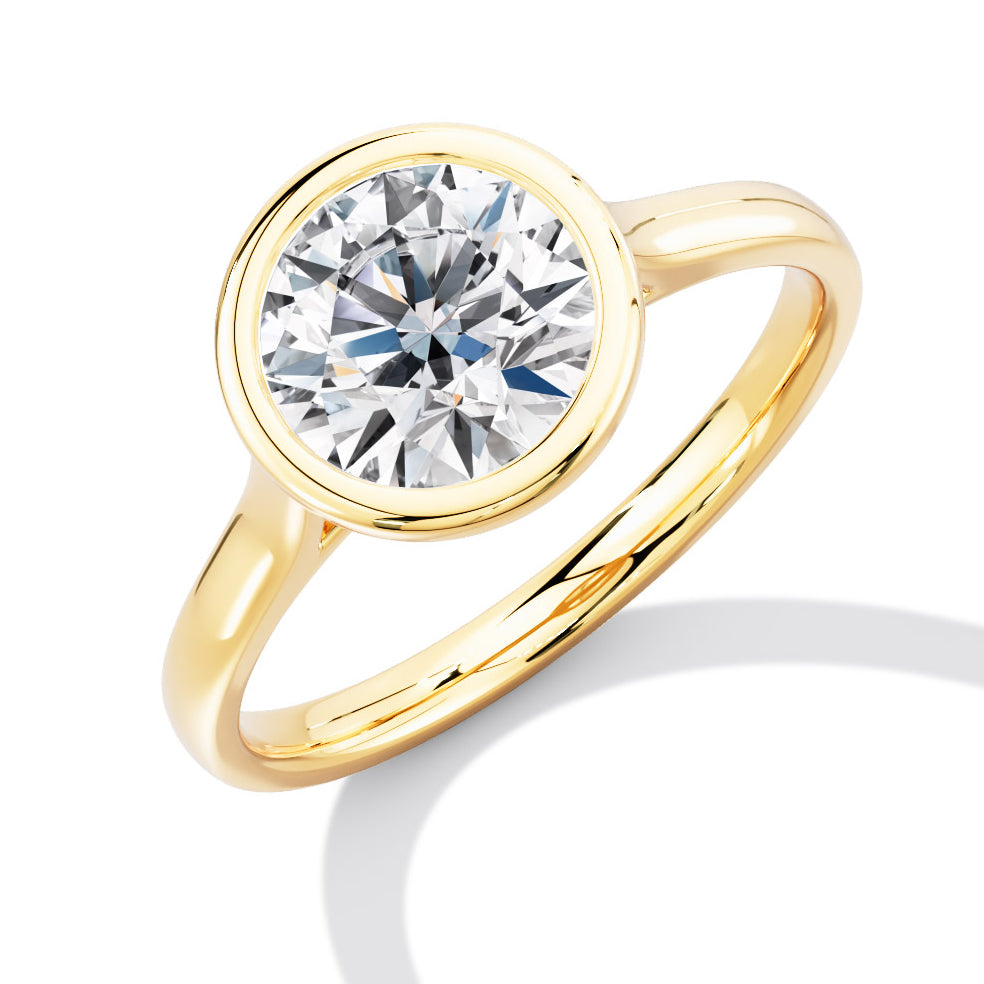


At first glance, moissanite and diamonds can look remarkably alike. Both are brilliant, hard-wearing stones that catch the light beautifully. Lab-grown diamonds look like natural diamonds because, in the ways that matter to their appearance and material properties, they are diamonds.
But there are important differences.
Moissanite is a separate gemstone with its own distinctive sparkle. Lab-grown diamonds have the same essential chemical composition and crystal structure as natural diamonds, but are created in a laboratory rather than formed beneath the Earth’s surface over geological time.
At Anupam, our engagement rings are set with natural or lab-grown diamonds, not moissanite. We believe it is important to understand exactly what you are choosing, so you can find a stone that feels right for you.
If you are beginning your search, our guide to how to choose a diamond explains the 4Cs, while lab-grown or natural diamonds explores the difference between those two options in more detail.
What is moissanite?
Moissanite is a gemstone made from silicon carbide, rather than carbon. The French chemist Henri Moissan identified natural silicon carbide crystals in material from a meteorite crater in Arizona in 1893.
Naturally occurring moissanite is exceptionally rare, so the stones used in modern jewellery are grown in laboratories.
Moissanite has a beauty of its own. It is durable enough for many everyday jewellery designs and is particularly known for its colourful flashes of light, often described as fire. For some people, that extra colour is exactly what makes it appealing.
It is worth understanding that this is not another type of diamond. It is a different gemstone, with its own composition, optical properties and price.
What can you actually see?
The most noticeable difference for many people is the way the stones handle light. Moissanite can produce more pronounced rainbow-coloured flashes, while diamonds are often prized for their balance of bright white light and flashes of colour.
Here is how the three compare.
| Natural diamond | Lab-grown diamond | Moissanite | |
|---|---|---|---|
| What it is | A diamond formed naturally within the Earth | A diamond grown in a laboratory | A separate gemstone made from silicon carbide |
| Sparkle | Bright brilliance with flashes of colour | The same fundamental optical properties as a natural diamond | Often more pronounced rainbow-coloured flashes |
| Hardness | 10 on the Mohs scale | 10 on the Mohs scale | Approximately 9.25 on the Mohs scale |
| Colour description | Diamond colour is commonly graded on a D–Z scale | Diamond colour is commonly graded on a D–Z scale | Assessed using different grading conventions; not directly comparable with the diamond D–Z scale |
| Can you distinguish it by eye? | Not always from the other two | Not reliably from a natural diamond | Sometimes, particularly under certain lighting |
| Can a specialist identify it? | Yes, using appropriate testing | Yes, using specialist testing | Yes, using suitable gemmological examination |
| Relative price | Often the most expensive of the three | Generally less expensive than a comparable natural diamond | Generally the least expensive of the three |
| Available in Anupam engagement rings? | Yes | Yes | No |
Prices vary with size, quality, cut, certification and the individual stone, so these comparisons are a guide rather than a guarantee.
In ordinary lighting, many people would struggle to distinguish a well-cut moissanite from a diamond simply by looking at it. Under strong spotlights or direct sunlight, the difference in sparkle may be more apparent: moissanite can produce a particularly vivid display of rainbow colour.
Some people love this effect. Others prefer the more familiar balance of brilliance and fire they associate with diamonds.
Lab-grown diamonds, meanwhile, have the same fundamental optical properties as natural diamonds. Their origin is not something you can reliably determine just by looking at them.
Can a jeweller tell moissanite from a diamond?
Yes, with appropriate gemmological examination.
One useful clue is something called double refraction. Moissanite can split light into two rays, which may make the rear facets appear doubled when viewed through a loupe from a suitable angle. Diamond does not show this same effect. How clearly it appears depends on the stone's cut, orientation and viewing conditions.
Specialist testing can provide further confirmation. A basic thermal diamond tester may not reliably distinguish moissanite from diamond, because moissanite can also conduct heat well. Instruments that use additional measurements can help separate the two.
Distinguishing a lab-grown diamond from a natural diamond is a different matter. They share the same fundamental material properties, and ordinary visual inspection is not a reliable way to establish their origin. Specialist equipment and appropriate documentation may be needed.
This is why clear descriptions and reliable diamond grading reports matter. Paperwork should identify the stone accurately, rather than leaving you to rely on appearance alone.
For more detail, read our guide to how to tell if a diamond is real.
Does moissanite last as well as a diamond?
Moissanite is a hard and durable gemstone. At approximately 9.25 on the Mohs hardness scale, it is well suited to many rings intended for regular wear and has good resistance to scratching.
Diamond scores 10 on the same scale and is the hardest naturally occurring mineral. The Mohs scale is a ranking rather than a linear measurement, so the difference between the numbers should not be interpreted as a simple percentage difference in durability.
Hardness is only one part of the picture, however. The design of the ring, the setting, the way the stone is protected and how the jewellery is worn all affect its long-term condition.
A moissanite engagement-style ring can be a practical everyday choice, but like any ring, it needs sensible care. Have the setting and claws checked periodically, particularly if you wear it every day.
Are moissanite rings cheaper than diamond rings?
Generally, yes. Moissanite is usually considerably less expensive than a natural diamond of a comparable appearance and size. It is also generally less expensive than a comparable lab-grown diamond, although prices vary and the difference between them can change.
Lab-grown diamonds have become an important option for people who want a diamond at a lower purchase price than a comparable natural diamond. They offer the same fundamental diamond properties, although the two have different origins and market dynamics.
Moissanite is priced as a different gemstone, not as a lower grade of diamond. It is not assessed using the same diamond grading system, so colour descriptions or quality claims from a moissanite seller should not automatically be compared with a diamond grading report.
It is also worth thinking about future value. The resale market for moissanite can be limited, and you should not assume that any of these stones will retain its original retail price. If resale matters to you, ask questions before buying and make your decision with realistic expectations.
What about cubic zirconia?
Cubic zirconia, often shortened to CZ, is another diamond alternative, but it is different from both moissanite and diamond.
It is softer than either of them, scoring around 8–8.5 on the Mohs scale. With prolonged wear, cubic zirconia can develop scratches and lose some of its original brilliance. It is also usually much less expensive, making it a popular choice for fashion jewellery.
At Anupam, we use cubic zirconia for the coloured birthstone-style stones in our sterling silver birthstone pendants. We are clear about the materials used in our jewellery, because we believe you should always know what you are buying.
Explore our guide to birthstones by month to discover the colours associated with each month.
Is moissanite the right choice for you?
There is no need to dismiss a gemstone simply because it is not a diamond. What matters is understanding the difference and choosing something that suits your taste, expectations and budget.
Choose a natural diamond if you value a diamond formed naturally within the Earth and appreciate its geological origin.
Choose a lab-grown diamond if you want a real diamond with the same fundamental material and optical properties as a natural diamond, created in a laboratory and generally available at a lower price.
Consider moissanite if you enjoy its distinctive rainbow flashes and want a durable gemstone at a lower price point. Just be sure you are choosing it as moissanite, rather than assuming it is another form of diamond.
At Anupam, we offer natural and lab-grown diamonds in our engagement rings. We do not set moissanite in these rings, but we believe every customer deserves clear, honest information when comparing their options.
Find the diamond that feels right for you
Choosing an engagement ring is a personal decision. The stone's appearance matters, but so do its origins, the way it catches the light, your budget and what it represents to you.
Browse our lab-grown diamond collection or explore our engagement rings.
If you would like to compare your options in person, you are welcome to book an appointment with us in Ashford. We will talk you through the differences, answer your questions and help you choose with confidence.
Because the best choice is an informed one — and one you will feel happy wearing for years to come.
Frequently asked questions
Does moissanite look like a real diamond?
It can look very similar at a glance, particularly in everyday lighting. However, moissanite is a different gemstone and often displays stronger rainbow-coloured flashes. Appearance varies with the stone's cut, size and lighting conditions.
Is a lab-grown diamond a real diamond?
Yes. A lab-grown diamond has the same fundamental chemical composition and crystal structure as a natural diamond. The difference is how it forms: one grows in a laboratory, while the other forms naturally within the Earth.
Which sparkles more, moissanite or diamond?
Moissanite often produces more pronounced rainbow-coloured flashes, known as fire. Diamonds have their own balance of brilliance and fire, influenced by their cut and proportions. Which looks better is a matter of personal preference.
Is moissanite harder than cubic zirconia?
Yes. Moissanite is approximately 9.25 on the Mohs hardness scale, compared with around 8–8.5 for cubic zirconia. Both can be used in jewellery, but moissanite is generally more resistant to scratching.
Can I tell the difference between a natural and lab-grown diamond by looking at it?
Not reliably. Natural and lab-grown diamonds share the same fundamental optical properties. Establishing their origin can require specialist gemmological equipment and appropriate documentation.
Does moissanite hold its value?
You should not assume it will retain its original retail price. The resale market can be limited, and what a buyer may pay depends on demand, condition and the individual stone. If future resale matters to you, discuss this before purchasing.
Does Anupam sell moissanite engagement rings?
No. Our engagement rings are set with natural or lab-grown diamonds. We are happy to explain how these compare with moissanite so you can understand your options before making a decision.