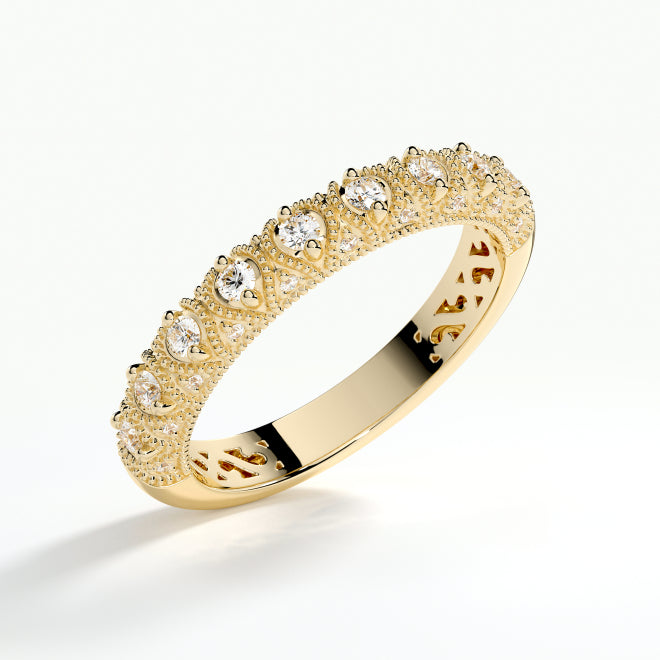

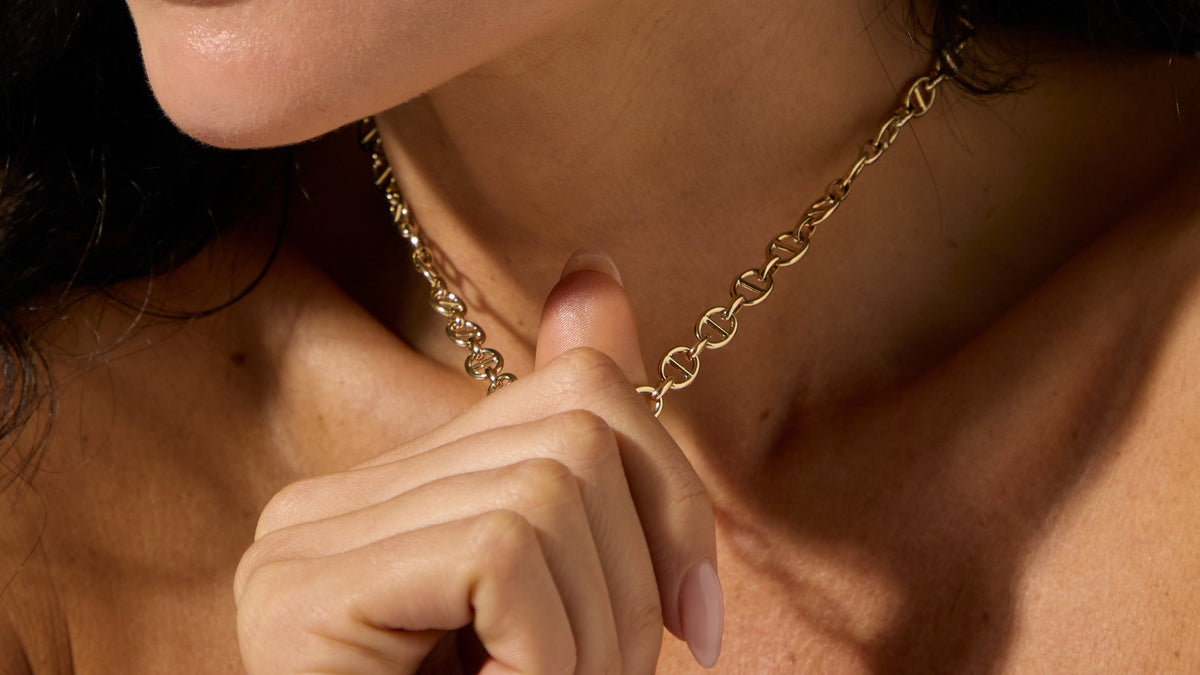

A ring you wear every day goes everywhere you do. It meets hand cream in the morning, a day’s work and the cooking in the evening, so even a beautifully cut diamond can look tired after a few weeks, although nothing about the stone has changed.
For 9ct, 14ct and 18ct gold, platinum 950 and diamonds, warm water, a few drops of mild washing-up liquid and a soft brush are all you need. What matters as much is what you leave out: bleach, toothpaste, rough cloths and, for softer stones, soaking of any kind. This is the home method; our guide to how to look after your jewellery covers the rest, from storage to checking claws.
At Anupam, cleaning and polishing are done in our Ashford workshop, alongside claw work, re-rhodium plating and stone replacement. A clean is also a good moment to look closely at a piece, because a worn claw or a thinning band is easier to spot once the dirt has gone.
How do I clean gold jewellery at home?
You will need: a small bowl, warm water, mild washing-up liquid, a soft toothbrush and a soft, lint-free cloth.
- Fill the bowl with warm, not hot, water and add a few drops of washing-up liquid.
- Leave the piece to soak for a few minutes to loosen the grease.
- Brush gently with the toothbrush, getting into the corners behind the stones and around the claws.
- Rinse in clean warm water. Work over the bowl, not an open plughole.
- Pat dry with the cloth and let the piece air for a few minutes.
The same method suits yellow, white and rose gold in 9ct, 14ct and 18ct, and platinum 950.
White gold is usually plated with rhodium, so use a soft brush and a light touch: hard scrubbing wears the plating faster.
Sterling silver can be washed the same way, but tarnish needs a soft silver polishing cloth rather than a soak.
How do I make a diamond sparkle again?
A diamond is dulled by a film, not by age. Hand cream, soap and skin oils coat the underside of the stone, where light is reflected back up through the top, and the sparkle fades.
Diamonds attract grease, so a ring you wear every day is worth cleaning every few weeks, while a pendant or earrings need it less often. Use the method above and spend longest brushing underneath the stone. Afterwards, hold the ring by the band rather than the stone, because fingerprints put the grease straight back.
Lab-grown diamonds are diamonds, so they are cleaned in exactly the same way.
Can I use toothpaste, vinegar or window cleaner?
No. Warm water and washing-up liquid do the job better, and each of these can do harm.
| What people try | Why we’d avoid it |
|---|---|
| Toothpaste and baking soda pastes | They are gritty, and leave fine scratches on the metal and on softer stones |
| Vinegar and lemon juice | Pure gold wouldn’t react, but jewellery is an alloy, joined with solder. Acid can etch both, and it harms pearls and softer stones |
| Bleach, chlorine and window cleaner | They aren’t made for jewellery. Bleach and chlorine can discolour and pit gold alloys and attack solder joints, and strong household cleaners can harm softer stones and pearls |
| Kitchen roll, tissue and rough cloths | Their fibres can leave fine scratches on polished metal |
| Very hot water | A sudden change in temperature can crack some stones |
If you have already tried one of these and the metal looks dull or marked, professional polishing can often refresh the finish. Bring it in and we’ll take a look.
Which stones need more care?
Diamonds, sapphires and rubies usually cope well with warm soapy water. Softer, porous or treated stones don’t, and glued-in stones, which are common in costume jewellery, can come loose if soaked. If a piece has any of these, even beside diamonds, wipe it with a damp soft cloth instead of soaking it.
| Stone | Why it needs care | What to do |
|---|---|---|
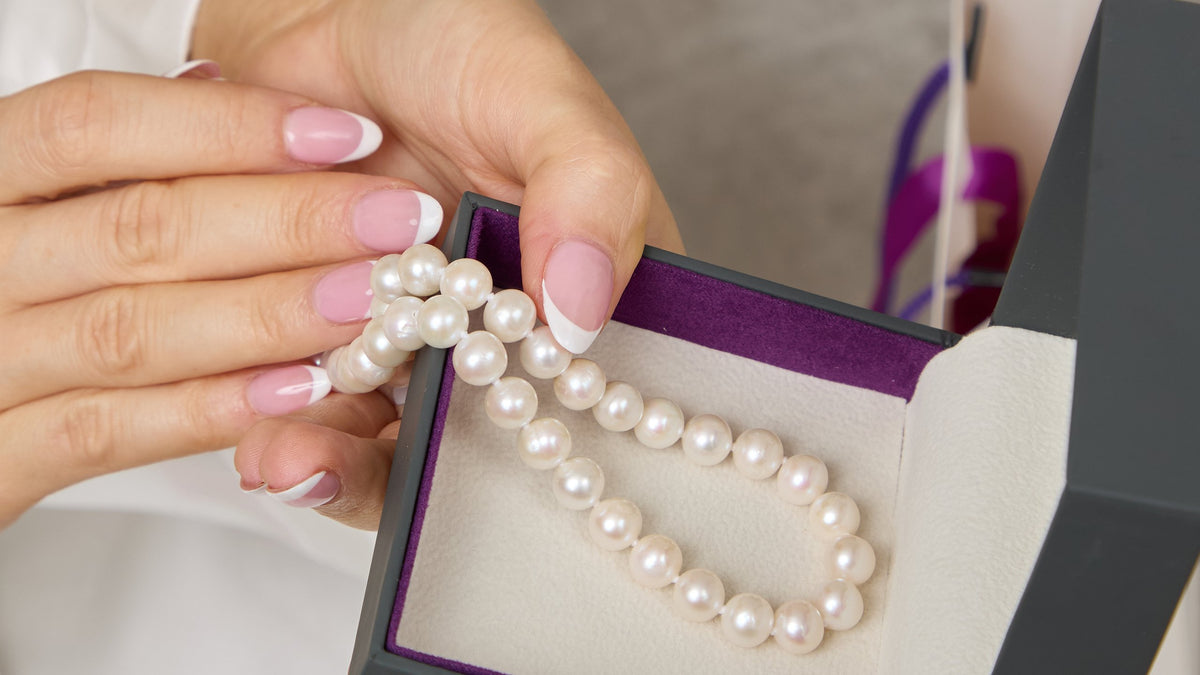
| Pearls | Soft and organic. Soaking, acids and perfume weaken the pearls and the thread | Wipe with a damp soft cloth and dry flat |
| Opal | Holds water, so it can crack or craze if it dries out or heats quickly. Doublets and triplets are glued in layers, which water can seep between | Wipe quickly, dry gently, never soak |
| Emerald | Often treated with oil or resin to hide natural fractures, which chemicals, heat and soaking can undo | Damp cloth only |
| Turquoise, coral, lapis lazuli, amber | Porous or organic, so they soak up liquids and can stain | Damp cloth only |
| Tanzanite | Sensitive to knocks and sudden changes in temperature | Brief warm, never hot, soapy water or a damp cloth |
If you aren’t sure what a stone is, treat it as one of these and wipe it rather than soak it. A pearl strand that looks tired may simply need restringing, and how to tell if pearls are real covers the signs.
Is an ultrasonic cleaner safe for jewellery?
For most pieces, it isn’t one to risk at home. An ultrasonic cleaner shakes dirt loose with high-frequency vibration, and that same shaking can work a stone free from claws that are already worn. It can also damage pearls, opals, emeralds and any treated or fractured stone, and it can’t warn you that a claw is loose until the stone is in the bottom of the tank.
If you own one, keep it for plain, solid pieces, or hard stones in settings you know are sound. Steam adds heat to the same risks, so leave it to a jeweller, who will check the settings first.
When should I bring it to a jeweller?
Clean a piece only if it feels secure. If a stone rattles, tilts or sits lower than it did, don’t clean it at all: bring it in as it is.
Bring a piece in too if:
- the claws look thin or worn, or the ring snags on clothes and hair;
- 9ct, 14ct or 18ct white gold has gone yellowish or patchy, because the plating has worn and needs re-plating (here is why white gold turns yellow);
- dirt or tarnish won’t shift, or is packed into detail you can’t reach;
- the piece is scratched or has lost its shine, and needs polishing.
Have a piece cleaned in Ashford
We do clean jewellery while you wait, depending on how busy we are, so it’s always best to book your pieces in.
If you would like us to look at a piece, book a time with us and bring it in as it is.
Frequently asked questions
Can I make my own jewellery cleaner?
The best home cleaner is the simplest: warm water and a few drops of mild washing-up liquid.
Will cleaning wear my ring out?
Gentle home cleaning with soap and a soft brush doesn’t remove metal. Professional polishing does take off a small amount each time, so a clean at home is the better habit for everyday sparkle, and polishing is best kept for scratches and a dull finish.
Why does my stone still look cloudy after cleaning?
Dirt can be packed under a stone or into a setting where a brush can’t reach, and that needs a jeweller. If a stone still looks dull after a professional clean, have it looked at: cubic zirconia, for example, can scratch and lose some of its brilliance with prolonged wear.
Will chlorine damage my gold ring?
It can, so take rings off before you swim in pools and hot tubs. If you forget, rinse the ring in clean water and dry it.
Why has my white gold ring turned yellowish?
Cleaning won’t fix it, because it isn’t dirt. The rhodium plating on white gold wears thin over time and the warmer colour of the gold beneath shows through.