

Inherited jewellery is rarely just jewellery. A wedding ring worn every day for decades, a brooch you remember on a coat, a chain that was never taken off: each one carries the person with it. That’s why it can be hard to know what to do with it.
There’s no right answer. Keep the pieces safe, find out what you have, and then choose: keep a piece as it is, wear it, reset the stones into something new, or have it melted down and made into a new design. Melting is the one choice that can’t be undone. The repairs and remodelling below are carried out in our workshop in Ashford, as why we do everything on site explains.
If you’ve lost someone recently, this may not be the time for decisions, and that’s fine. The jewellery can wait.
Where should you start with inherited jewellery?
By finding out what you have. A ring that looks plain can hold a better stone than you’d expect, and a necklace that looks grand can turn out to be plated or set with glass. Until you know, look after everything as it is:
- keep each piece in its own pouch or box, so pieces don’t scratch one another;
- don’t clean or polish anything yet, as polishing removes a small amount of metal each time;
- photograph each piece, including any marks or inscriptions inside;
- keep any certificates, receipts or old valuations with the jewellery.
The hallmark is the quickest clue to the metal: 375 for 9ct gold, 750 for 18ct gold, 950 for platinum 950 and 925 for sterling silver. UK hallmarks explained shows how to read the rest.
Should you have inherited jewellery valued?
If you’re keeping a piece to wear, it’s worth having it valued for insurance. We arrange independent insurance valuations with Shirley Mitchell FGA DGA FJVA. The valuation estimates the cost of replacing a piece with a comparable one at current retail prices.
A valuation tells you what you have; it isn’t an offer to buy it. Jewellery valuations explained goes through it in more detail.
How much does it cost to value inherited jewellery?
Shirley’s fees are based on the number of items and the work involved, not on what the jewellery is worth, and we’ll confirm the fee before you proceed. For new insurance valuations, the fees, including VAT at the current rate, are:
| Service | Fee |
|---|---|
| Report and administration fee | £95 |
| Each standard item | £65 |
| Group of up to five similar, lower-value items | From £90 |
| Premium items and luxury watches | From £90 |
| Single-stone diamonds over 1.00ct | £75 per carat |
Grouping helps with an inherited collection. Similar lower-value pieces, such as a handful of fine chains or plain stud earrings, can be valued together, so you don’t pay to value every small item separately. Some pieces need more research, which can affect the cost: diamonds over 1.00ct, large multi-stone pieces, Rolex watches and certain antique items, for example.
An example: a parent’s ring valued as one standard item, plus five similar, lower-value pieces valued as a group.
| Item | Fee |
|---|---|
| Report and administration | £95 |
| One standard item | £65 |
| A group of five similar, lower-value items | From £90 |
| Total | From £250 |
Can you keep it and wear it as it is?
Often, yes. Old jewellery usually needs a check more than a change. In our workshop we can:
- tighten loose claws and re-tip worn ones;
- replace a missing diamond or gemstone with a close colour match;
- repair a chain or replace a catch;
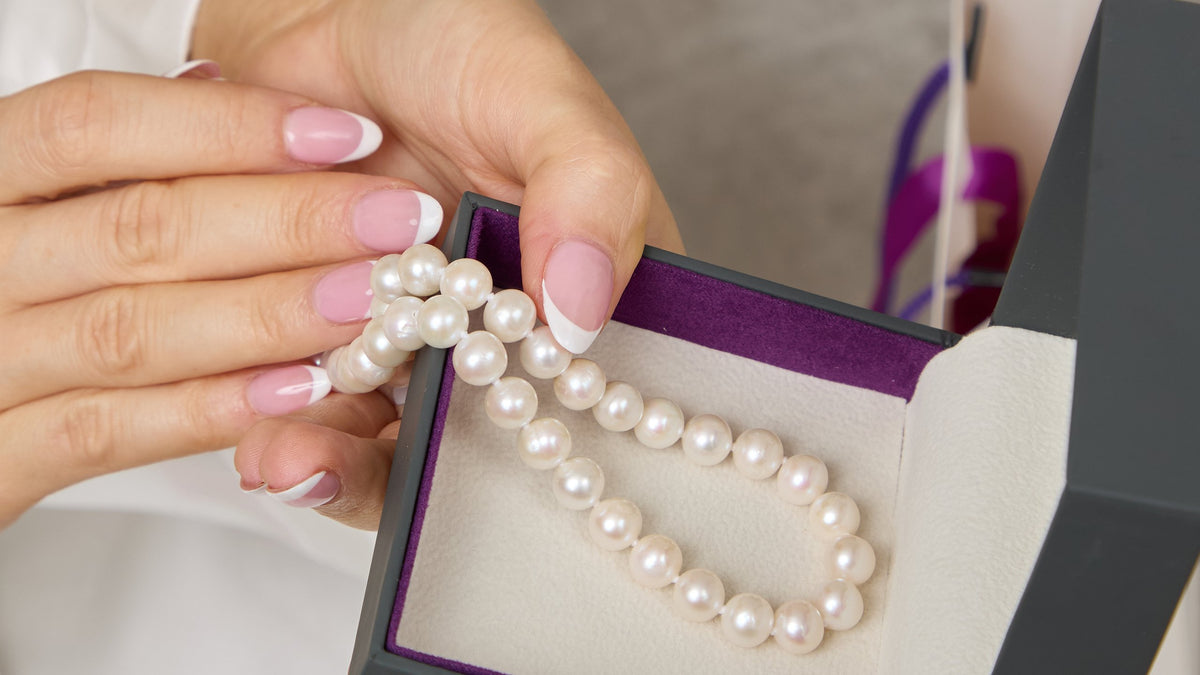
- restring pearls, with a knot between each pearl;
- re-plate 9ct, 14ct or 18ct white gold with rhodium and polish the piece (why white gold turns yellow explains why it’s needed);
- resize a ring to fit you (ring resizing covers what can and can’t be done);
- fit a new battery or strap to a watch. We no longer service certain watch brands, so ask us about yours first.
A ring worn for decades is often thin at the bottom of the band, so have it checked before you wear it every day. If there’s an inscription inside, tell us before any resizing starts. It’s part of the ring’s story, and the work can be planned around it.
Can you reset a family stone?
Often it’s the stone you want to keep and the setting that has had its day. A diamond or gemstone from an old ring, brooch or pair of earrings can be reset in a new design, such as a ring, a pendant or earrings, made in 9ct, 14ct or 18ct gold or platinum 950 to suit the person who will wear it. Bespoke designs can be drawn in CAD first, so you can see the piece before it’s made.
One caution: an old-cut diamond, with its chunkier, softer-edged sparkle, is usually best reset as it is. Recutting it to a modern brilliant loses weight, and with it the character you wanted to keep.
What can you do with a parent’s wedding ring?
A parent’s wedding ring can be the hardest piece to decide about. It’s plain, it was worn every day for years, and there’s no obvious thing to do with it.
Rings from two people can be combined into a single new ring or pendant. Or you can keep the originals safe and wear a new ring beside them. Keeping a ring unchanged is a perfectly good decision too.
How can you turn old jewellery into something new?
Pieces that are broken, out of fashion or never worn can be melted down and made into a new design, and stones from the old pieces can be set into the new one. Depending on the pieces, this can be more cost-effective than buying new. What to do with gold of different carats, and how your own metal is used in the new piece, is a conversation we have with you.
As a new piece, it’s hallmarked afresh where it’s heavy enough to need one, so it will show exactly what it’s made of.
There’s no typical price. Remodelling falls under our bespoke service, and the price depends on a lot of factors: the metal, the gemstones and how complex the design is. The best way to start is with a consultation, where we can talk it through in detail. Whoever does the work, agree the design and the cost before anything is melted.
Our advice: if you’re unsure, do the things that can be undone first: a valuation, a repair, a new setting for one stone. Remodelling can always come later.
Bring the pieces in
When you’re ready, bring the pieces in and book a time with us in Ashford. Nothing has to be decided on the day; we’ll look at what you have with you and talk through the options.
You can read about made-to-order work on our bespoke page, or see everything else the workshop does.
Frequently asked questions
Does Anupam buy inherited gold?
No, Anupam doesn’t buy gold. A buyer’s offer is often based on what they can resell or recover from the piece, so it can differ from a valuation.
Can I have inherited jewellery valued without the paperwork?
Yes. Certificates, receipts and earlier valuations are useful if you have them, but the valuer assesses the jewellery itself. Bring whatever you’ve found along with the pieces.
Can two wedding rings be made into one?
Yes. How it’s done depends on the metals in each ring, so bring both in and talk it through before anything is melted.
Can I wear an inherited ring every day?
You can, once it’s been checked. If it’s a valuable piece, check with your insurer whether it needs an insurance valuation now that it’s yours.